Quick Overview:
Ceremonial cacao is minimally processed cacao paste traditionally used for ritual and mindful consumption. It provides gentle energy from theobromine, supports mood through naturally occurring compounds, and is commonly consumed in doses of 10–30g depending on intention. It is not psychedelic but may promote emotional clarity and sustained focus.
If you're looking for a high-quality option, explore our ceremonial grade cacao sourced for ritual and mindful use.
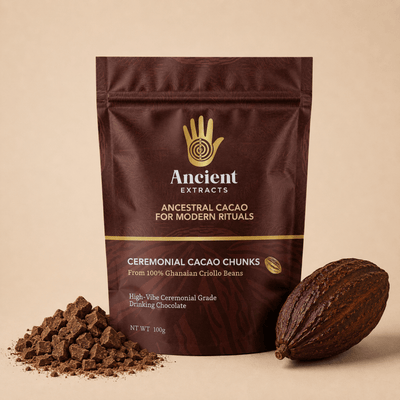
Ceremonial cacao is a minimally processed, whole-bean cacao paste traditionally used in Mesoamerican cultures for ritual, connection, and nourishment. Unlike commercial cocoa powder, ceremonial cacao retains its natural fats, micronutrients, and active compounds offering a richer, more complete experience.
Today, ceremonial cacao is used across the UK and globally for:
- Mood support
- Gentle, jitter-free energy
- Meditation and intention setting
- Creative flow
- Emotional grounding
This guide covers everything you need to know including benefits, dosage, preparation, safety, and how ceremonial cacao differs from regular cocoa.
What Is Ceremonial Cacao?
Ceremonial cacao comes from the cacao tree, scientifically known as Theobroma cacao. The name literally translates to “food of the gods.”
Unlike cocoa powder, ceremonial cacao is:
- Made from whole cacao beans
- Minimally processed
- Stone-ground into a paste
- Not defatted
- Free from additives or sugar
Historically, cacao was revered by the Maya civilization and Aztec civilization, who consumed it as a sacred drink during rituals, community gatherings, and rites of passage.
Modern ceremonial cacao continues that tradition — though today it is often used for mindfulness practices, creative work, and wellness rituals.
Ceremonial Cacao Benefits

1. Mood & Emotional Well-Being
Ceremonial cacao is valued for its naturally occurring compounds that are commonly associated with mood support and emotional balance. Rather than acting as a stimulant alone, cacao works through a combination of gentle neuroactive and mineral components that support a calm, uplifted state.
Theobromine
Theobromine is the primary stimulant found in cacao. Unlike caffeine, it works more gradually by gently supporting circulation and alertness. This slow-release effect is why ceremonial cacao is often described as producing clarity and warmth rather than restlessness or crashes.
Phenylethylamine (PEA)
PEA is sometimes referred to as the “love molecule” because it plays a role in feelings of motivation, pleasure, and emotional connection. In cacao, PEA is present in small, naturally occurring amounts and is often associated with feelings of uplift and positive mood.
Anandamide
Anandamide is an endocannabinoid naturally produced in the body and also found in cacao. It is linked to feelings of wellbeing and mental ease, which may contribute to the sense of emotional openness many people associate with ceremonial cacao rituals.
Magnesium
Cacao is naturally rich in magnesium, a mineral involved in relaxation, nerve signalling, and stress regulation. Magnesium intake is often associated with a calm but focused mental state, helping explain why cacao is frequently described as “grounding yet energising.”
Many people report that ceremonial cacao supports emotional clarity, introspection, and a sense of connection, especially when consumed mindfully.
We explore these experiences further in our guide to cacao ceremony benefits explained.
2. Natural Energy Without Jitters
Ceremonial cacao provides energy through theobromine rather than high caffeine, making it a popular alternative for those sensitive to coffee.
Instead of a sharp spike, cacao’s energy is often described as:
- Smooth and sustained
- Free from nervousness or shakiness
- Supportive of long focus sessions
- Suitable for meditation, journaling, or creative work
Because cacao contains significantly less caffeine than coffee, it is often chosen by those looking to reduce stimulant intake while still maintaining alertness.
3. Heart-Opening & Circulation Support
Cacao is naturally rich in flavonoids, plant compounds that support healthy blood flow and circulation. Improved circulation may contribute to the warm, expansive sensation many people experience when drinking ceremonial cacao.
Research on cacao flavonoids suggests they may support vascular function and healthy circulation when consumed as part of a balanced diet.
In traditional and ceremonial contexts, cacao is often described as “heart-opening.” This term is cultural and experiential rather than medical, commonly associated with:
- Emotional release
- Increased empathy
- Deeper personal reflection
- A sense of connection to self and others
These effects are subjective, but widely reported across ceremonial cacao practices.
4. Rich in Antioxidants & Essential Minerals
Ceremonial cacao is a nutrient-dense whole food that naturally contains:
- Flavonoids (antioxidant compounds)
- Magnesium (supports relaxation and nerve function)
- Iron (supports oxygen transport in the body)
- Zinc (involved in immune and metabolic processes)
- Healthy fats (support satiety and slow energy release)
The combination of antioxidants and minerals contributes to cacao’s reputation as both energising and grounding, particularly when consumed regularly as part of a mindful routine.
Ceremonial Cacao vs Coffee: Energy & Mood Comparison
| Feature | Ceremonial Cacao | Coffee |
|---|---|---|
| Primary stimulant | Theobromine | Caffeine |
| Energy release | Slow & sustained | Fast & intense |
| Jitters | Rare | Common |
| Crash | Minimal | Frequent |
| Mood experience | Calm, open, grounded | Alert, sometimes anxious |
For those searching “ceremonial cacao energy vs coffee”, cacao is often chosen for emotional balance, steady energy, and ritual use, while coffee is typically used for rapid stimulation.
If you're comparing alternatives, explore our full cacao vs coffee and matcha comparison.
Ceremonial Cacao Dosage Guide (UK & Global Guidance)
Quick Answer
The typical ceremonial cacao dosage ranges from:
- 10–15g for micro-dosing
- 20–30g for a standard ceremonial experience
- 30–40g for deeper rituals (experienced users only)
If you are new to ceremonial cacao, always start low and increase gradually based on body weight, sensitivity, and intention.
How Body Weight & Sensitivity Affect Dosage
Individual response to cacao varies. Lighter individuals or those sensitive to stimulants often feel noticeable effects at the lower end of each range, while heavier individuals may require slightly more for the same perceived intensity.
As a general guideline:
- Lighter or sensitive individuals often feel best starting with micro-doses
- Heavier individuals may naturally gravitate toward the middle of each range
- Sensitivity matters more than experience—listen to how your body responds
There is no benefit to rushing into higher amounts.
Microdose (Daily Use)
10–15 grams
Ideal for:
- Morning clarity
- Creative or focused work
- Replacing coffee
- Light emotional grounding
This level offers gentle mood support and steady energy without strong stimulation, making it suitable for regular use. Many people use this dose several times per week as part of a morning or wellness ritual.
Using a clearly dosed ceremonial cacao paste makes it easier to measure consistent servings.
First-time tip:
If this is your first experience with ceremonial cacao, begin closer to 10g to observe how your body responds.
Standard Ceremony Dose
20–30 grams
The most common range for:
- Meditation circles
- Yoga or breathwork
- Personal intention setting
- Emotional reflection
At this level, cacao’s effects are more noticeable but still balanced. Sensations may include warmth, openness, and sustained focus.
Effects typically begin within 20–40 minutes and may last 2–4 hours, depending on preparation, hydration, and individual sensitivity.
Deep Ceremony Dose
30–40 grams
Recommended only for experienced users who already understand their response to cacao.
This level may be associated with:
- Strong emotional awareness
- Heightened sensory perception
- Deeper introspective states
At higher doses, hydration becomes especially important. Avoid combining cacao with alcohol, strong stimulants, or late-night use.
Why “Start Low and Increase Gradually” Matters
Ceremonial cacao works differently from coffee. Instead of forcing stimulation, it supports circulation and neurochemical pathways that build gently over time.
Starting low allows you to:
- Understand your personal tolerance
- Avoid overstimulation or discomfort
- Build trust in the experience
- Increase dosage intentionally, not reactively
Many people find that less cacao, used consistently, creates better results than infrequent high doses.
Hydration & Preparation Reminder
Cacao naturally supports circulation, which increases the body’s need for water. For best experience:
- Drink water before and after cacao
- Avoid consuming on a dehydrated stomach
- Prepare cacao slowly and mindfully
Proper hydration often improves clarity, comfort, and overall experience.
Why Consistency & Intention Matter
Unlike caffeine, ceremonial cacao is often experienced as cumulative and intentional.
Many users report:
- Subtle effects during early sessions
- Greater emotional clarity with repeated use
- A deeper experience when paired with intention, journaling, or meditation
Approaching cacao as a ritual rather than a stimulant supports both safety and satisfaction.
How to Prepare Ceremonial Cacao

Preparation plays an important role in the experience.
Step-by-Step Guide
1️⃣ Chop or grate your cacao paste
2️⃣ Heat water to warm (not boiling)
3️⃣ Add 150–200ml water per serving
4️⃣ Blend or whisk until smooth
5️⃣ Add optional spices (cinnamon, cayenne, vanilla)
6️⃣ Sit, breathe, and drink slowly
Drinking slowly over 10–20 minutes allows the body to integrate effects gradually.
For a deeper ritual structure, read our guide on how to hold a cacao ceremony at home.
Optional Additions
You may add:
- Cinnamon (warming)
- Cayenne (circulation)
- Coconut milk (creaminess)
- Honey (mild sweetness)
Avoid refined sugar to preserve the purity of the experience.
Ceremonial Cacao vs Cocoa Powder
| Ceremonial Cacao | Cocoa Powder |
|---|---|
| Whole bean paste | Defatted powder |
| Minimal processing | Highly processed |
| Retains natural fats | Fat removed |
| Used for ritual & wellness | Used mainly for baking |
| Stronger flavour & effect | Milder |
The key difference is fat content and processing. Ceremonial cacao preserves the cacao butter and full spectrum of compounds.
For a more detailed breakdown, see our guide on the difference between cacao and cocoa.
Is Ceremonial Cacao Safe?
Ceremonial cacao is generally considered safe for healthy adults when consumed responsibly and in moderate amounts. It has a long history of traditional use and is typically well tolerated when prepared and dosed mindfully.
That said, ceremonial cacao is an active food, not an inert beverage.
Understanding Theobromine & Stimulant Sensitivity
Ceremonial cacao naturally contains theobromine, a gentle stimulant that works differently from caffeine. Theobromine is slower-acting and longer-lasting, which is why cacao energy is often described as smooth rather than intense.
However, individuals who are sensitive to stimulants may still notice:
- Increased heart rate
- Restlessness
- Difficulty sleeping if consumed late in the day
Ceremonial cacao also contains small amounts of caffeine, which may compound sensitivity in some people especially when combined with coffee, tea, or pre-workout supplements.
Avoid or Consult a Professional If You:
You should avoid high doses or seek professional guidance if you:
- Are pregnant or breastfeeding
- Have serious cardiovascular conditions
- Are taking MAOI or SSRI medications
- Are highly sensitive to stimulants
- Have been advised to limit circulatory or stimulant-active foods
Because cacao can influence circulation and neurotransmitter activity, individuals with underlying medical conditions should exercise caution—particularly with ceremonial-level doses.
Not a Medical Treatment
Ceremonial cacao is not a medicine and is not intended to diagnose, treat, cure, or prevent any disease. Any emotional or energetic effects described are experiential and traditional, not clinical claims.
If you have concerns about how cacao may interact with your health or medications, consult a qualified healthcare professional before use.
Safe Use Best Practices
To support a safe and positive experience:
- Start with a low dose, especially if new
- Avoid combining with other stimulants
- Stay well hydrated
- Avoid late-evening consumption if sensitive to sleep disruption
Used responsibly, ceremonial cacao is widely enjoyed as part of a mindful wellness or ritual practice.
Who Is Ceremonial Cacao For?

Ceremonial cacao is best suited for individuals who value intentional energy, emotional awareness, and mindful routines, rather than intense stimulation.
Ideal For:
-
Meditation practitioners
Supports calm alertness and sustained focus during seated or guided practices. -
Yoga & wellness communities
Often used before gentle movement, breathwork, or restorative sessions to encourage presence and embodiment. -
Creative professionals
Writers, designers, musicians, and artists often choose cacao for steady mental clarity without the pressure or jitteriness associated with coffee. -
Writers and artists
Many report improved flow, focus, and emotional expression during creative work. -
Individuals reducing coffee intake
Cacao is commonly used as a coffee alternative due to its lower caffeine content and smoother energy profile. -
Emotional processing or reflection work
Frequently incorporated into journaling, intention setting, or personal rituals where introspection and emotional awareness are valued.
Not Ideal For:
-
People extremely sensitive to stimulants
Even though cacao is gentler than coffee, it still contains theobromine and small amounts of caffeine. -
Those expecting psychedelic effects
Ceremonial cacao is not psychedelic. Its effects are subtle, grounded, and experiential—not hallucinogenic or consciousness-altering in a clinical sense. -
Individuals with specific cardiovascular restrictions
Because cacao supports circulation, those with heart-related conditions should consult a healthcare professional before consuming ceremonial-level doses.
What Does Ceremonial Cacao Feel Like?
Ceremonial cacao is often described as producing subtle, embodied sensations rather than dramatic effects. The experience is typically gentle and unfolds gradually, especially when consumed mindfully.
Commonly Reported Sensations Include:
-
Warmth in the chest or body
Often linked to cacao’s circulatory support and grounding qualities, creating a sense of physical ease or openness. -
Enhanced focus and mental clarity
Many people notice sustained attention without the sharp intensity commonly associated with coffee. -
Emotional clarity
Users frequently describe feeling more aware of emotions without feeling overwhelmed, making cacao popular for reflection or journaling. -
Gentle euphoria or uplift
Rather than a “high,” cacao is often associated with a mild sense of positivity or contentment. -
Heightened presence and mindfulness
Many people report feeling more connected to their body, breath, or surroundings, particularly in quiet or intentional settings.
What It Does Not Feel Like
Ceremonial cacao is not intoxicating, psychedelic, or hallucinogenic. The experience is usually grounded and functional, allowing people to move, think, and engage normally throughout the day.
Why Experiences Vary
Responses to ceremonial cacao can differ based on:
- Dosage (micro-dose vs ceremonial dose)
- Setting (quiet ritual vs busy environment)
- Mindset and intention
- Individual sensitivity to theobromine and caffeine
Some people feel noticeable effects in their first session, while others experience more subtle shifts that become clearer with repeated use.
How Long Do Effects Last?
Effects typically:
- Begin within 20–40 minutes
- Peak around 1–2 hours
- Gradually taper after 3–4 hours
Hydration and body weight influence duration.
Can You Drink Ceremonial Cacao Every Day?
Yes — many people microdose daily (10–15g).
Daily use is generally well tolerated when:
- Dosage is moderate
- Hydration is maintained
- Overall stimulant intake is balanced
Is Ceremonial Cacao Psychedelic?
No. Ceremonial cacao is not psychedelic.
It does not contain psychoactive hallucinogens. Its effects are nutritional and circulatory, often interpreted emotionally rather than neurologically altered.
Choosing High-Quality Ceremonial Cacao in the UK
When buying ceremonial cacao, look for:
- 100% pure cacao paste
- No added sugar
- Transparent sourcing
- Ethical farming practices
- Clearly labeled gram guidance
High-quality cacao should smell rich, earthy, and slightly bitter.
You can view full sourcing and preparation details on our ceremonial grade cacao product page.
Final Thoughts
Ceremonial cacao bridges ancient tradition and modern wellness through a practice that is both structured and deeply personal. Rather than acting as a quick stimulant, it supports a more intentional relationship with energy, focus, and emotional awareness.
Many people are drawn to ceremonial cacao for its:
- Gentle mood support
- Smooth, sustained energy
- Emotional depth and clarity
- Grounding, ritual-based approach
Whether used as a daily micro-dose or reserved for intentional ceremonies, ceremonial cacao invites presence rather than urgency. Its effects tend to unfold gradually, shaped by preparation, setting, and mindset.
As with any active food, the best approach is mindful use: start low, prepare intentionally, stay hydrated, and listen to your body. When respected in this way, ceremonial cacao can become a meaningful part of a balanced, conscious wellness routine.
Ceremonial Cacao FAQs
1. What is ceremonial cacao?
2. Is ceremonial cacao the same as cocoa powder?
3. Does ceremonial cacao contain caffeine?
4. What does ceremonial cacao feel like?
5. Is ceremonial cacao psychedelic?
6. How much ceremonial cacao should I drink?
7. Can you drink ceremonial cacao every day?
8. What is the best time to drink ceremonial cacao?
9. Can ceremonial cacao cause side effects?
10. Is ceremonial cacao safe?
11. What is ceremonial grade cacao?
12. How do you prepare ceremonial cacao?
13. What is the difference between cacao and cocoa?
14. Is ceremonial cacao good for meditation?
15. How long do ceremonial cacao effects last?